
In a historic re-unification if the Greater Cleveland Community, as part of the Iceality Silver Revelation, North East Ohio Area has been 'branded' as the Home of the Environmental Art(s) Movement by the International Center for Environmental Arts (ICEA) as a 'Cultural Industry', to foster civic identity, cultivate tourism, and brand Ohio Environmental Arts and Culture District in the Bioregion.
The International Center for Environmental Arts (ICEA) was founded by David and Renate Jakupca in 1987 to meet the compelling needs of ordinary citizens for access to current, balanced, understandable information about complex global issues.When you look around you can see ICEA has been an overwhelming success.
ICEA was organized into three divisions: Environmental, Humanities, Arts and Culture, this acts as an umbrella organization of affiliated groups that support related agendas. ICEA's mission is the Theory of ICEALITY on Environmental Arts, that is to "Assist in understanding of the relationship between Humans and their Environment through Arts and culture ultimately promoting a sustainable global Culture of Peace between all Living Things (Human, Plant and Animal Kingdoms)" As the first professional art organization to be solely dedicated to this endeavor, this has made ICEA a leader in the Environmental Arts Movement and a force for socially responsible activity.
ICEA participated in the 1992 EARTH SUMMIT, and in 1993, David and Renate were official UN Observers to the UN Conference on Human Rights in Vienna , Austria. There with the approval of the US delegates, Geraldine Ferraro and President Jimmy Carter, ICEA has been promoting iceality and recycling all major UN World Conferences until they were discontinued in 2007. These recycled conferences and related ICEA exhibits have received international critical acclaim in the environmental arts movement.
As a visionary providing inspiration for others in the sustainable development of Cleveland, David has been officially designated by The City of Cleveland, Earth Island Institute and other major organizations as the "Spiritual Father of the Environmental Art Movement". TIME Magazine nominated them for their Millennium Heroes for the Planet.
The historic ARK in Berea, home of the sustainable global Environmental Arts Movement, helped inaugurate the green building trend that is now sweeping America. In 2000, mainly because of their heightened talent to match ability with vision, David and Renate were the ideal avant-guides to help lead the Nation into the next Millennium when they spent six months in Europe at EXPO2000, the World's Fair in Hannover, Germany as Americas Cultural Ambassadors.
Over the years, ICEA has gained a reputation for excellence based upon a unique library of specialized, current information on global importance and a wide range of imaginative programming and collaborations with other organizations to meet the needs of a broad constituency. With affiliates across the globe, the ICEA supports research, information sharing and effective action promoting a sustainable Global Culture of Peace for All Living Things.

1- 1992 Earth Summit on the Environment, Rio de Janeiro, Brazil
2- 1993 World Conference on Human Rights, Vienna, Austria
3- 1994 World Conference on Population and Development, Cairo, Egypt
4- 1995 World Conference on Women, Beijing, China
5- 1996 Habitat II- UN Conference on Human Settlements, Istanbul, Turkey
6- 2000 World's Fair, Expo2000, Hannover, Germany
7- 2001 World Conference on Racism, Durban, South Africa
8- 2002 World Summit on Sustainability, Johannesburg, South Africa
9- 2003 World Conference on Peace, Verbania, Italy
10- 2005 World Conference on Peace, Verbania, Italy
11- 2007 World Peace Conference, Santa Fe, New Mexico
The result of this major global public promotion at the United Nations level,
is that the Theory of Iceality on Environmental Arts is now considered as the
cornerstone of the modern sustainable global Environmental Art Movement and
this concept is now replicated by artists, architects,
urban planners and sustainable organizations throughout the World, reflecting a still growing global audience. However, it must be noted that not all of Jakupca's
contemporaries did accepted the new theory at once.
 |
| Renate Jakupca and Geraldine Ferraro In 1993 in Vienna, Austria at the World Conference on Human Rights, ICEA, with the approval of U.S. Delegates, Jimmy Carter and Geraldine Ferraro, began promoting Iceality and recycling all United Nations' World Conferences until 2007 |
ICEALITY SILVER REVELATION BACKGROUND CHECK by Christa Herbert:
- -- The Environmental Arts Movement was professionally organized by the The International Center for Environmental Arts (ICEA) founded by David and Renate Jakupca in 1987.
- -- Environmental Art is the true indigenous art form of the greater Cleveland, Ohio area.
- -- The ARK in Berea is the global home to the Environmental Art Movement.
- -- David Jakupca is the recognized leader and the Spiritual Father of the Environmental Art Movement.
- -- The 'Theory of Iceality on Environmental Arts' is now considered as the cornerstone of the modern sustainable global Environmental Art Movement and the concept is now replicated by urban designers, architects and artists throughout the World.
- -- In 1993 in Vienna, Austria at the World Conference on Human Rights, ICEA, with the approval of U.S. Delegates, Jimmy Carter and Geraldine Ferraro, began recycling and promoting United Nations' World Conferences until 2007..
- -- Through this partnership with the United Nations, ICEA has influenced a global audience of literally billions of people.
- -- Environmental Art was used by the National Endowment for the Arts as part of their 1997 American Canvas Project that is currently used in all 50 States.
- -- In 2000, David and Renate Jakupca were appointed American Cultural Ambassadors representing the US at EXPO2000, The Worlds Fair held in Hanover, Germany.
- -- Environmental Art is the number one Art Movement in Cleveland, Ohio
- -- Environmental Art is the number one Art Movement in America.
-
-- Environmental Art is the number one Art Movement Worldwide.

Some Examples of Major Organizations utilizing the Theory of Iceality on Environmental Arts Principles
EXPO 2000
From June 1st to October 31st, 2000, Hannover (Germany) hosts the World Exposition EXPO 2000. The exposition stands under the theme "Humankind - Nature - Technology: A new world arising".
About 180 countries and organizations participate in this event. David and Renate Jakupca were appointed American Cultural Ambassadors representing the United States, more than 50 countries have build their own pavilion, the remainder are presenting in exhibition halls. The exposition is accompanied by a cultural and events program. Have a look at www.expo2000.de for more details about the EXPO 2000.
http://en.wikipedia.org/wiki/Expo_2000
http://www.expo2000.org/index1.php
TED
(Technology, Entertainment and Design) is a global set of conferences owned by the private non-profit Sapling Foundation, formed to disseminate "ideas worth spreading." From 1990 onward, a growing community of "TEDsters" has been gathering annually at the invitation-only event in Monterey, California, until 2009, when it was relocated to Long Beach, California due to a substantial increase in attendees.http://www.ted.com
BIONEERS
The whole-systems movement for social, cultural and environmental resilience
HUMANE EDUCATION ADVOCATES REACHING TEACHERS (HEART’s) services are specially designed to provide a combined focus on human rights, animal protection and environmental ethics. Our direct services to educators and students, as well as our city and state level advocacy efforts, enable us to significantly impact the way young people think about their responsibility to one another, animals and the natural world.http://www.bioneers.org
http://conference.bioneers.org
http://teachhumane.org/heart/
The Carnegie Endowment for International Peace is a unique global network founded in 2010 of policy research centers in Russia, China, Europe, the Middle East, and the United States.
http://CarnegieEndowment.org
National Peace Academy
A Holistic Approach: Five Interrelated Spheres of Peace
http://nationalpeaceacademy.us/
UN Proposes New Architecture for Sustainable Development.
At the United Nations Rio+20 Earth Summit in 2012, 192 countries agreed to create a set of universal Sustainable Development Goals. A United Nations working group negotiates a set of “sustainable development goals,” proposed a fundamentally different way to frame this concept. Over the last several decades, sustainable human development has been conceived largely as the outcome of balanced work on three “pillars” .
http://dotearth.blogs.nytimes.com/2013/03/21/scientists-propose-a-new-architecture-for-sustainable-development.
Rio+20 Earth Summit - United Nations Conference on Sustainable Development.
http://www.uncsd2012.org/
*Iceality is the measure of the connection between arts, civic engagement and the environment, which can be defined as promoting a sustainable positive and peaceful quality of life for all living things.
Examples of NorthEast Ohio Environmental Arts Practitioners of the Theory of Iceality on Environmental Arts:The Collinwood Painted Rain Barrel Project
http://www.sustainablecleveland.org/annual-summits/2013-2/Example of a Lorain County's Ohio Environmental Arts Program:
Follow the Fish Art and Adventure Trail
http://followthefishtrail.com/
Ingenuity Fest
http://ingenuitycleveland.com/
We are all connected to everything else through Iceality -
The Science Behind Environmental Arts
The "Theory of Iceality on Environmental Arts" is practical study on the aesthetics of the relationship between Humans and their Environment through Arts and Culture, ultimately promoting an effective sustainable global Culture of Peace between all Living Things ~ Human, Animal and Plant Kingdoms)
http://bereabuzz.blogspot.com/2013/02/environmental-arts-theory-of-iceality.html

RESEARCH FINDINGS
Results for Comparable Artworks and Artist History of David Jakupca
David Jakupca is an American Philosopher, Ambassador, Artist, Activist and Author. He serves both as an American Cultural Ambassador and Universal Peace Ambassador in International capacities. He is extremely influential through his works, especially as a philosophical advocate and practitioner of the environmental arts methods developing the Sustainable Age revolution.
Jakupca with his wife, Renate, are the co-creators of the 'Theory of Iceality on Environmental Arts', aligning the vision with real-world social conditions and logistics. This work established and popularized inductive formulas for scientific inquiry, sometimes called the Iceality Method. His demand for a planned procedure of investigating all things natural marked a new turn in the rhetorical and theoretical framework for the science of aesthetics, much of which surrounds conceptions of proper Environmental Art Methodology today.
Jakupca has been recognized as the 'Spiritual Father of the Environmental Arts Movement' and in that capacity, several disciples of his work went on to spread the word on Iceality. His ideas were influential in the 1990's among scholars like Jane Alexander, Chairwoman of the National Endowment of the Arts (NEA), who in the ‘AMERICAN CANVAS’ Project frequently adheres to the Method of Iceality approach in its idealistic visions and entrepreneurial inquiries. Major organizations, in particular, the United Nations, featured his Theory on Iceality in many of their World Conferences. The result of this major global public promotion at the United Nations level is that the Theory of Iceality on Environmental Arts is now considered as the cornerstone of the modern sustainable global Environmental Art Movement, and this concept is now replicated by artists, architects, urban planners and sustainable organizations throughout the World, reflecting a still growing global audience. However, it must be noted that not all of Jakupca's contemporaries did accept the new theory at once.
David Jakupca is also considered to be the philosophical influence behind the dawning of the millenniums Sustainable Age. In his works, David Jakupca called for a development of avant-garde trilateral symmetry of social systems to align his vision with real-world social conditions and logistics that contend with the problems facing earth’s future. He always proposed that these environment/humanitarian/cultural systems should be done in conjunction with charitable purposes as a matter of healing this planet. Recalling Einstein’s admonition, paraphrased here, that a problem cannot be solved by the same thinking that created the problem in the first place, Jakupca, being ever mindful of the ecospheric integrity, advocated that the Environmental Arts should be practical and have as a holistic purpose the improvement of all living things.
This changed the course of art in history, from a merely contemplative state, as it was found in ancient times, to a practical, inventive modern state that will, it time, continue to lead to the new Methods of Iceality that will prevent Ecocide and make possible a Sustainable Age, a Culture of Peace for all Living Things in the following centuries.
Although much of these Methods of Iceality proposals will not be established in his lifetime, his legacy was already considered by TIME Magazine, in their 2000 Millennium Edition, as one of their Heroes of the Planet.
Similar to a Cultural District with the historic ARK in Berea as its focal point, the North East Ohio Area where David worked, has been 'branded' as the Home of the Environmental Art(s) Movement by the International Center for Environmental Arts (ICEA) and as 'Cultural Industry' will continue to foster civic identity, cultivate tourism, and brand Ohio Environmental Arts and Culture in the Bioregion.
For as one of his profilers, India Keyes commented, Jakupca's influence in the future world is so important that every person, plant or animal well being may be traced back to him. It is possible that someone using the Methodology of Iceality may find the cause of cancer, solve the worlds hunger problem or eliminate global warming.
David Jakupca’s philosophy in Art is displayed in his vast and varied art works and writings, which might be divided into the three great branches of the 'Theory of Iceality on Environmental Arts':
~ Environmental works – in which his ideas for a universal reform of knowledge, scientific method and the improvement of a sustainable state of Peace for all living things is presented.
~ Humanitarian works – in which his reforms in moral philosophy and social practices for Mankind are proposed.
~ Artistic works – in which he presents his original applied aesthetics on art and cultural objet d’arts.(click on images to enlarge)

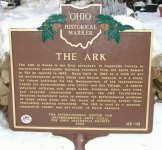 ARK in Berea
Mixed Media 1994 Signed Middle Front
A.R.K. stands for - Architektur Recycled Kulturstall.
The historic A.R.K. in Berea is the first structure in Cuyahoga County, Ohio to incorporate sustainable building concepts from the Earth Summit in Rio de Janeiro in 1992. It was hand built in 1994 by David and Renate Jakupca and considered the global home of the Environmental Arts Movement.
Estimated replacement value at $119,000 by the Cuyahoga County Auditor's Office, its value goes up exponentially when its historical, social and environmental factors are added in.
 People Not Mascots' Logo
Photo Unavailable
Acrylic on Canvas 22" x 28" 1992 Signed Lower Right
Current Owner assumed to be Lake Erie Native American Council (LENAC)
The 'People Not Mascots' Logo is meant to be a Native American protest caricature of the Cleveland Indians Baseball team. It was originally painted by David Jakupca, it has drawn criticism from some sportswriters, fans and local businessmen, but gained immediate acceptance among humanitarian, religious groups and Native Americans. It gained international popular attention when it was it exhibited by ICEA at the 1993 UN World Conference on Human Rights held in Vienna, Austria and has become one of the most recognized anti-racists logo's in existence. It also caused repercussions for the groups connected with the logo and this has been documented in the INTERNECINE MATRIX http://theicea.com/page21
 The Minstrel Boy
Acrylic on Canvas 30" x 40" 1981 Signed Lower Left
Bermuda Maritime Museum
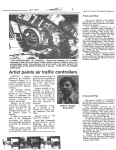 The Controllers
Acrylic on Canvas 30" x 46" 1979 Signed Lower Right
McKinley Museum
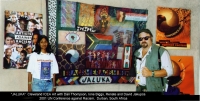
 United Steel Workers of America
Mixed Media 2002 Unsigned
David Jakupca, through ICEA, has donated signs, murals, paintings, press releases, etc. for organizations, causes, and people worldwide. This is especially true for Third World Countries at the UN World Conferences.
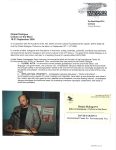 American Cultural Ambassadors David Jakupca, Germany's World's Fair,
EXPO 2000's 'Culture on the Move' . Here he addressed the 140 Nation
Assembly of the concept for a permanent universal symbol of renewal and
peace on earth for all living inhabitants through the 'Theory of
Iceality on Environmental Arts'. This Symbol of Living Peace was the
subject sculpture - Worlds Children Peace Monument. (WCPM) This project
was initiated in cooperation with the United Nations 2000 Culture of
Peace Program and organized in support of the UN Decade of Peace and
Non-Violence for the Children of the World and the United Nations
Millennium Development Goals.
American Cultural Ambassadors David Jakupca, Germany's World's Fair,
EXPO 2000's 'Culture on the Move' . Here he addressed the 140 Nation
Assembly of the concept for a permanent universal symbol of renewal and
peace on earth for all living inhabitants through the 'Theory of
Iceality on Environmental Arts'. This Symbol of Living Peace was the
subject sculpture - Worlds Children Peace Monument. (WCPM) This project
was initiated in cooperation with the United Nations 2000 Culture of
Peace Program and organized in support of the UN Decade of Peace and
Non-Violence for the Children of the World and the United Nations
Millennium Development Goals. -


